Finance is a field that offers many opportunities; there are many options to explore and skills to gain, depending on what you like to do. In this blog, we will see what the top career options are and what skills you need to master them to do well or kickstart your journey in finance.
The financial sector is undergoing a profound transformation. Whether you excel at numbers or story, the expanding financial sector offers career paths which could align with your skills and passion.
Required Education and Skills
Most finance jobs require a minimum of a bachelor’s degree in finance, accounting, economics or a related field. However, it depends on the role and career you want. In addition to graduation, there are professional certificates that can give you an edge in your future career in finance:
- CFA: Highly regarded in portfolio management and investment banking.
- CFP: Globally recognised for financial planners.
- FRM: Valuable for risk-management roles
Career Map
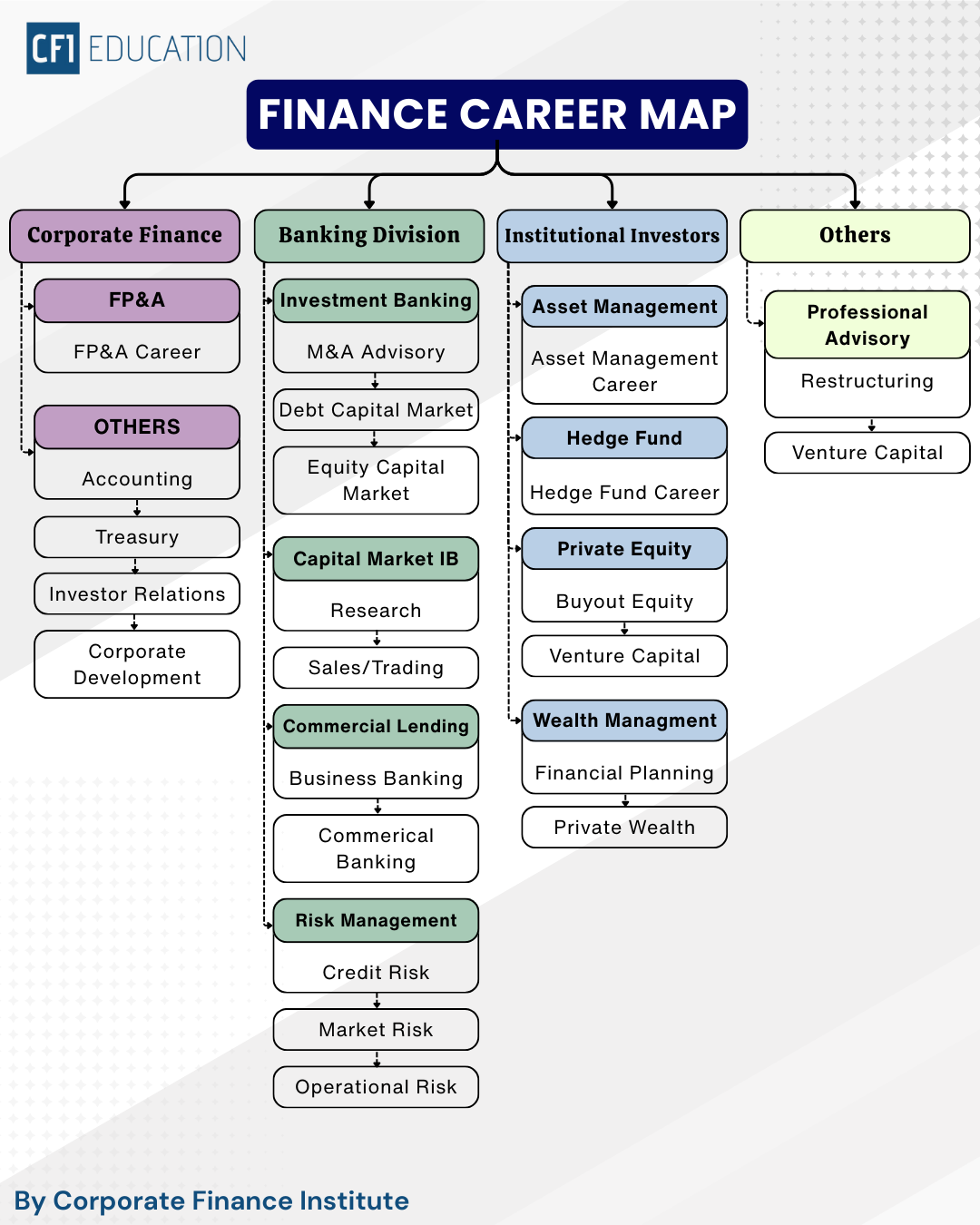
The map below will help you understand different finance domains, so you can identify your area easily.
Corporate Finance Career Path
A corporate finance career path focuses on managing a company’s financial resources to support its strategic goals. Professionals in this field work closely with executives to ensure financial stability, optimise investments, and drive business growth.
Corporate Finance Roles Explained Simply
- Financial Analyst: Digs into numbers and reports to help management make smarter business decisions and use resources efficiently.
- FP&A Manager: Takes charge of budgeting and forecasting, making financial data into clear insights that guide plans.
- Treasurer: Ensures the company always has enough cash, manages liquidity, and handles investments to keep finances stable.
- CFO (Chief Financial Officer): The financial leader of the company, responsible for shaping strategy, managing risks, and overseeing all financial operations.
- Investor Relations Specialist: Acts as the bridge between the company and investors, clearly communicating performance, strategy, and long-term vision.
- BI & Data Science Specialist: Uses data tools and analytics to spot trends, uncover insights, and support smarter strategic decisions.
Skills & Education Needed for Corporate Finance
To do well in corporate finance, you need more than just number-crunching skills. It’s a mix of analytical ability, business understanding, and clear communication. Some of the key skills include:
- Building financial models and analysing data to support decisions
- Planning budgets, forecasting performance, and allocating resources wisely
- Managing risk and supporting capital-raising activities
- Working confidently with tools like Excel, Power BI, and Tableau
- Explaining financial insights in a simple, clear way to non-finance teams
Most roles in corporate finance require a bachelor’s degree in finance, accounting, or economics. For senior or leadership positions, an MBA or professional certifications like FMVP can give a strong edge.
Banking Career Path
The banking industry is at the core of the economy. It helps people and businesses save money, access loans, and invest capital efficiently. As a banking professional, you may work with individuals, companies, or even governments—offering financial services, managing risks, and advising on important financial decisions.
Banking Roles
Banking offers a wide range of career paths, and each role focuses on a different part of the financial system. Here are some of the key roles you’ll find in the industry:
- Investment Banker: Helps companies raise capital and advises on mergers, acquisitions, and major strategic deals.
- Corporate Banking Analyst: Works closely with businesses to provide loans, credit solutions, and other financial services.
- Retail Banking Branch Manager: Runs day-to-day operations at a bank branch, with a strong focus on customer experience and profitability.
- Financial Advisor: Assists individuals and organisations with financial planning, from investments to retirement goals.
- Commercial Loan Officer: Reviews business loan applications, evaluates risk, and decides whether credit should be approved.
- Risk Manager: Identifies potential financial risks and designs strategies to reduce losses and protect the bank.
- Sales Trader: Executes trades for clients while sharing market insights and investment ideas.
- Equity Research Analyst: Analyses companies and industries to provide buy, sell, or hold recommendations.
- Compliance Officer: Ensures the bank complies with regulations, laws, and ethical standards.
- Credit Analyst: Assesses the creditworthiness of individuals and businesses to ensure lending decisions are sound.
- Treasury Analyst: Manages cash flows and liquidity, ensuring the organisation always has enough funds while keeping risks under control.
Each of these roles plays an important part in keeping the banking system efficient, stable, and trustworthy.
Skills & Education Needed for Investment Banking
A career in investment banking isn’t just about crunching numbers—it’s about combining financial expertise with strong people skills. To succeed in this field, you’ll typically need:
- A solid understanding of financial markets and valuation methods
- Strong analytical and quantitative skills to work through complex deals
- Clear communication and negotiation skills for working with clients and senior stakeholders
- Awareness of regulations, compliance, and ethical standards
- Advanced qualifications such as an MBA or relevant finance certifications
Investment banking is highly competitive, but building the right skill set and educational background can help you stand out. With the right preparation, you can move into roles that involve high-impact decisions, major transactions, and long-term strategic planning.
Asset and Wealth Management
Asset and wealth management is about more than just earning higher returns—it’s about building long-term financial security. Professionals in this field help individuals and institutions grow, protect, and manage their wealth through thoughtful investment planning.
Whether you’re working with high-net-worth individuals or large organisations, the role involves creating customised financial strategies that align with different goals, risk levels, and time horizons.
Asset & Wealth Management Roles Explained
Asset and wealth management professionals focus on investing wisely, managing risk, and building long-term portfolios for their clients. Each role plays a different part in helping people and institutions achieve financial security:
- Asset Manager: Focuses on growing investments by deciding how money should be allocated across assets while managing risk.
- Portfolio Manager: Manages investment portfolios day to day, balancing risk and return to meet specific client or institutional objectives.
- Investment Advisor: Collaborates closely with clients to recommend suitable investments and execute trades in accordance with their financial objectives.
- Financial Advisor: Provides overall financial guidance, including investments, tax planning, and estate planning.
- Wealth Manager: Helps high-net-worth clients grow and protect their wealth through comprehensive, long-term financial strategies.
- Wealth Management Associate: Supports senior advisors by handling portfolio updates, trade execution, and compliance-related tasks.
- Private Wealth Advisor: Builds strong relationships with affluent clients and delivers highly personalised financial solutions.
- Private Wealth Management Leader: Sets strategy and oversees operations at a senior or executive level within a wealth management firm.
Each of these roles contributes to helping clients build stability, preserve wealth, and achieve long-term financial growth. Whether your interest lies in investment management or client advisory, this career path offers the chance to make a meaningful impact on people’s financial futures.
Skills & Education Needed for Asset & Wealth Management
Doing well in asset and wealth management requires a balance of strong financial knowledge and the ability to work closely with clients. To succeed in this field, you’ll need to build:
- A solid understanding of portfolio management and different asset classes
- Strong communication and relationship-building skills to earn and retain client trust
- Knowledge of investment products such as mutual funds, hedge funds, and private equity
- Analytical skills to evaluate markets, investment opportunities, and financial products
Professional certifications like CFP, CFA, or FMVA® can significantly boost your credibility and help you stand out in a competitive industry. As demand for personalised wealth solutions continues to grow, developing these skills can open the door to a long and rewarding career in asset and wealth management.
Alternative Finance Career Paths
While traditional finance roles like corporate finance and investment banking continue to be popular, alternative finance is growing fast and opening up exciting new career options. This space includes areas like financial technology, private investments, and socially responsible finance—where innovation plays a major role.
If you’re interested in working at the intersection of finance, technology, and impact, alternative finance offers a dynamic environment with constantly evolving opportunities and career paths.
Key Sectors in Alternative Finance
Alternative finance is transforming the financial landscape, moving beyond traditional banking and investment models. It opens the door to innovative and fast-growing sectors, such as:
- FinTech: Combines finance and technology to build digital payments, blockchain-based solutions, robo-advisors, and AI-powered financial tools.
- Private Equity: Involves investing in private companies, improving their performance, and exiting those investments at a profit.
- Hedge Funds: Focus on advanced and often high-risk strategies to generate higher returns for sophisticated investors.
- ESG Investing (Environmental, Social, and Governance): Centres on sustainable and ethical investing, supporting companies with responsible business practices.
Alternative finance allows you to work on cutting-edge financial ideas while helping shape the future of global markets. Whether you’re excited by technology, impact-driven investing, or high-growth opportunities, this space offers plenty of paths to explore.